

Focus Stacking: What It Is, Why It Matters, and How to Use It
Some photographic problems can't be solved with settings alone.
You can stop down the aperture.
You can add more light.
You can back up and change focal length.
And sometimes, none of that is enough. That's where focus stacking comes in.
Why focus stacking exists
At close distances, depth of field becomes incredibly shallow. In macro and close-up photography, even f/16 or f/22 often isn't enough to keep an entire subject sharp.
Plus, the physics gets in the way: Stopping down further introduces diffraction. Pulling back changes the look of the image. And trying to "fix it" in a single frame usually leads to compromise.
Focus stacking exists to avoid those compromises.
Instead of forcing one image to do everything, you take a series of photographs, each focused at a slightly different distance, and combine the sharp parts into a single final image.
The result isn't "more processed" — it's simply more in focus.
What focus stacking is (and isn't)
Focus stacking is not about trickery or fakery. It's not about inventing detail that wasn't there.
It's about combining real, captured information in a controlled way.
Each frame contains genuine detail. The stacking process just decides which part of each frame is used.
Done well, the final image still looks natural — just with a depth of focus that isn't possible in a single exposure.
When focus stacking makes sense
Focus stacking is most useful when:
- you're working close to the subject
- depth of field is extremely shallow
- the subject is mostly static
- sharpness across the frame actually matters
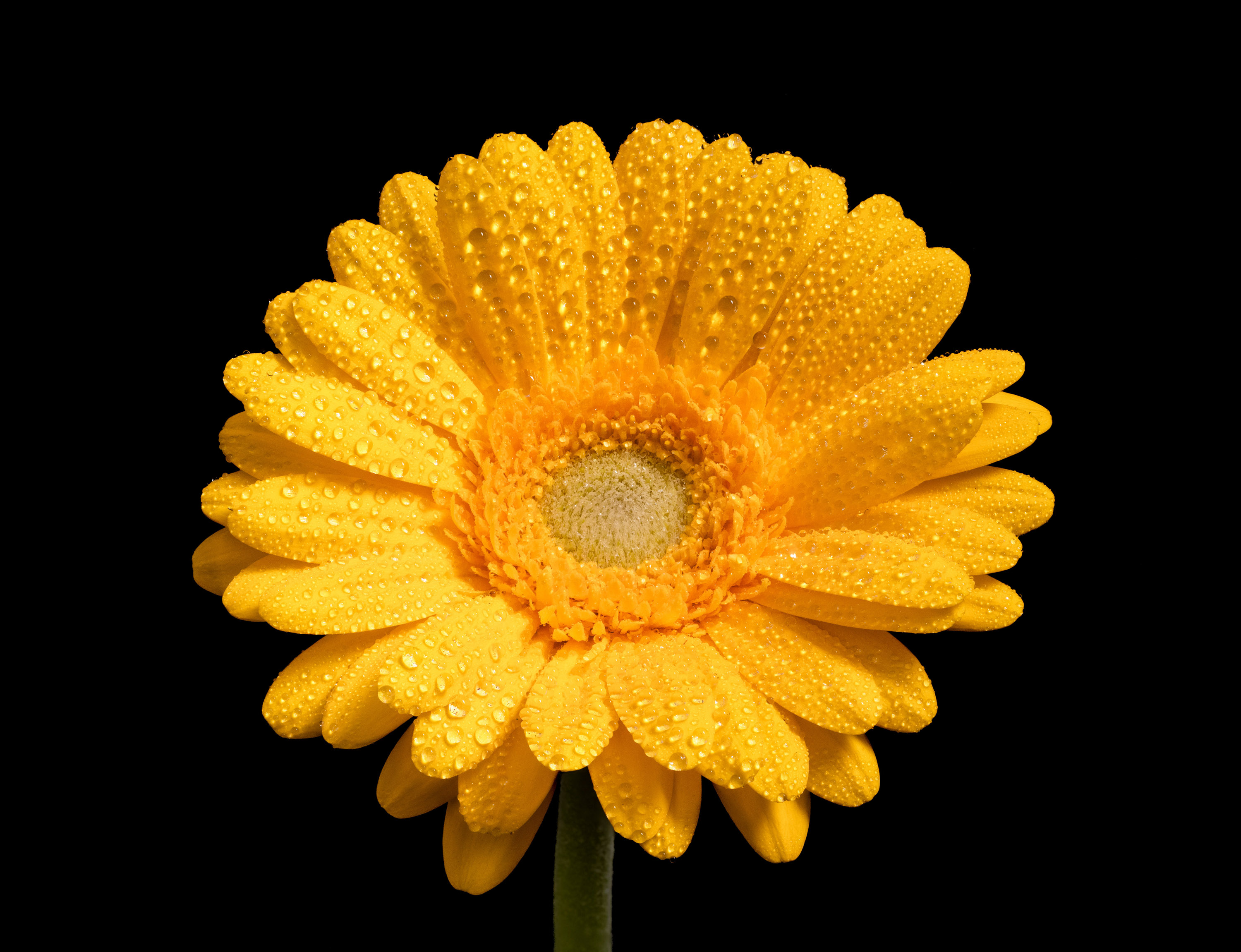
Classic examples include flowers, insects, product photography, still life and detailed textures — exactly the sort of subject shown below.
It's much less useful for anything that moves unpredictably. If the subject shifts between frames, stacking becomes harder or impossible.
The basic approach (software-agnostic)
The exact buttons change from one piece of software to another, but the process is always the same.
- Take multiple images — Keep the camera position fixed and shift focus slightly between frames, moving from front to back (or vice versa).
- Keep everything else consistent — Exposure, framing and lighting should remain the same across the sequence.
- Align the images — Automatic settings in your software aligns the frames to account for tiny shifts.
- Blend the sharp areas — The sharpest parts of each frame are combined into one image.
- Refine if needed — Sometimes small areas need tidying, especially where fine detail overlaps.
Whether you're using Photoshop, Affinity or something else entirely, the logic stays the same.
Why care and consistency matter
Focus stacking rewards precision. Small changes in framing, lighting or exposure can complicate the blend. The cleaner the original captures, the better the final result.
This is why focus stacking isn't just a software trick — it's a capture discipline.
Take your time. Work methodically. Think ahead.
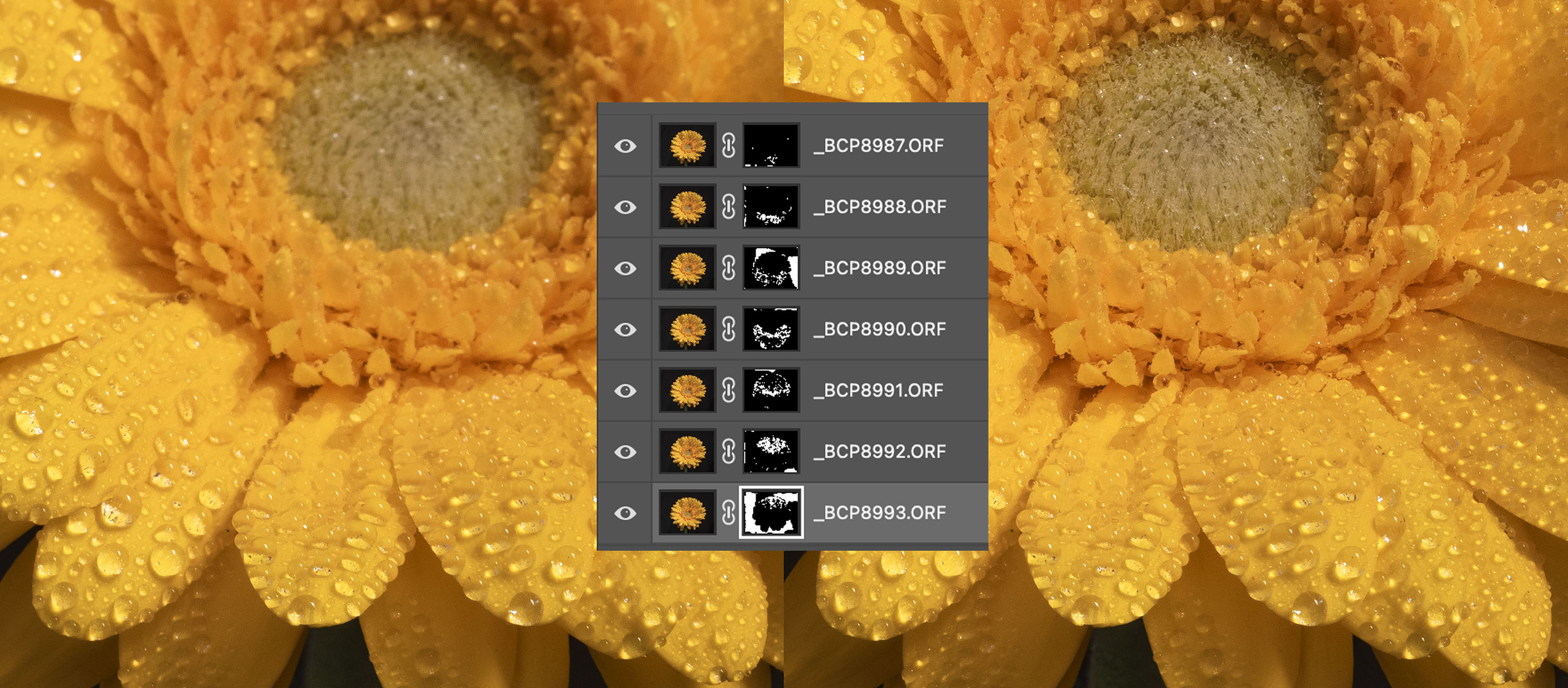
Left: a single frame with limited depth of field. Right: the same area after focus stacking, showing extended sharpness without stopping down further. Centre shows the focus-stacking sequence showing multiple images aligned and blended to combine sharp areas from each frame.
Focus stacking doesn't replace good technique. It's tempting to see stacking as a fix for sloppy shooting. It isn't.
- careful composition
- good lighting
- appropriate aperture choice (f8–f11 are good usually effective)
- clean focus transitions
Stacking doesn't rescue a weak image. It enhances a strong one.
A simple focus stacking checklist
- Choose a static subject (flowers, products, still life)
- Use a tripod or solid support
- Set manual exposure to keep frames consistent
- Decide your focus range (front to back)
- Take a sequence of images, changing focus slightly between each one
- Overlap focus points to avoid gaps
- Don't rush — consistency matters more than speed
- Align the images in your chosen software
- Blend the sharp areas into one image
- Check edges and fine detail for errors
- Tidy up only if needed — keep it natural
If the original captures are clean, the stacking process is usually straightforward.
Final thought
Focus stacking exists because cameras, and lenses, have limits.
Rather than fighting those limits, stacking works with them.
Used thoughtfully, it allows you to make images that are clear, detailed and controlled without sacrificing quality or realism. And once you understand the principles, the software becomes secondary.
It's not about the buttons.
It's about understanding the problem, and choosing the right solution.