
The Decisive Moment Isn't Luck
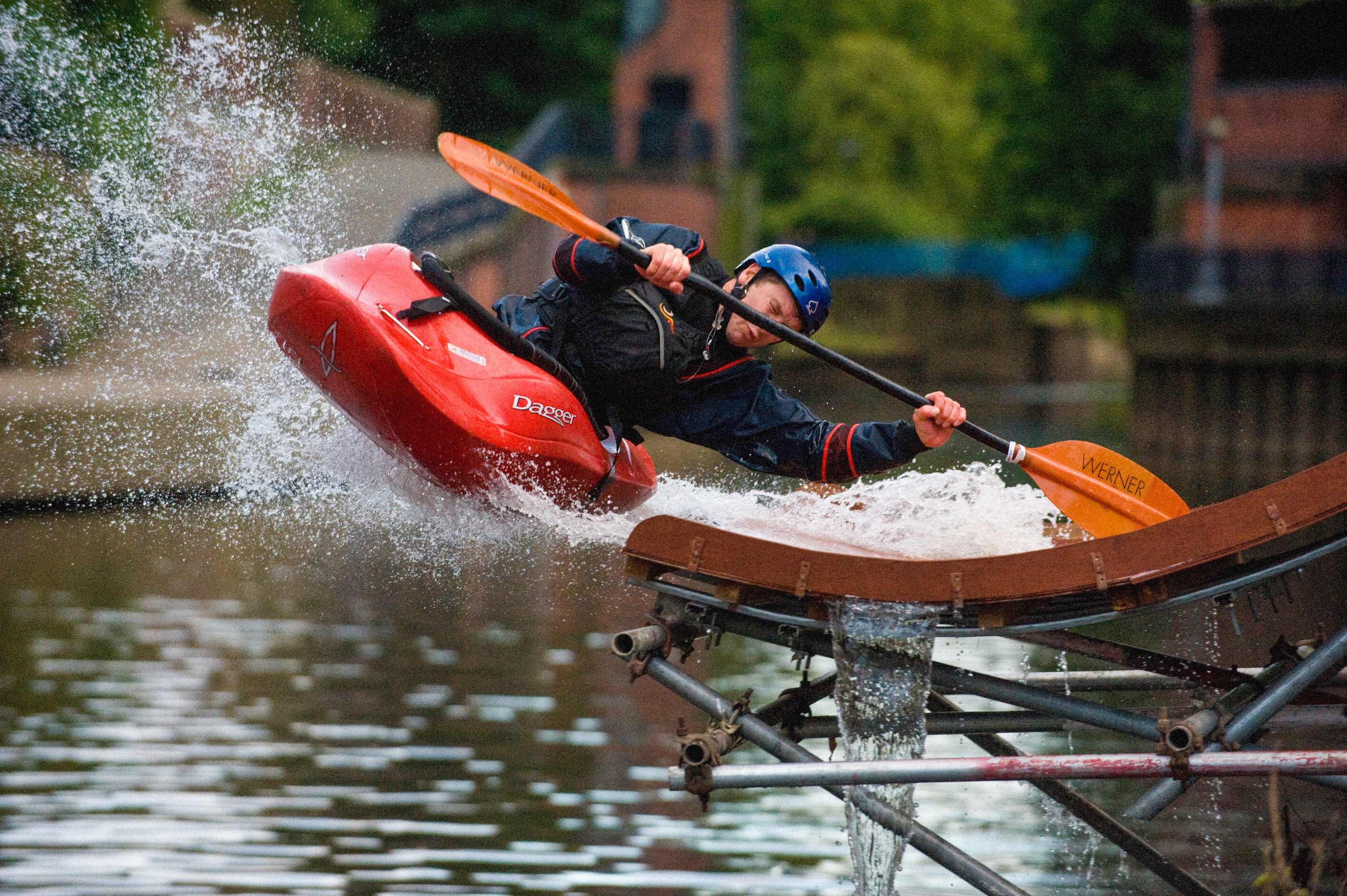
At first glance, the photograph below looks like pure timing.
A kayaker launched off the end of a ramp, suspended mid-air, with spray exploding behind him and the boat pitched at a dramatic angle. There's a split-second feeling to it — that brief pause between leaving the ramp and crashing back into the river.
It would be easy to call that luck.
But decisive moments aren't luck. They're recognised.
The decisive moment begins before the take-off
The "moment" isn't the instant the kayak leaves the ramp. It starts earlier — when the photographer understands what's about to happen.
In a sequence like this, the action is predictable:
approach → launch → hang time → splashdown
The key is committing to your position and framing before the peak happens, so when the subject hits the airborne phase, you're not chasing it — you're ready for it.
MYP takeaway:
If you're still adjusting when the action peaks, you'll miss it. Set your frame early, then wait.
Why this airborne frame works
This is the decisive moment because it shows the whole story in one image:
Separation: boat and paddler are cleanly off the ramp, creating instant impact Tension: the angled boat and stretched paddle line add energy and instability Consequence: you can feel the next moment coming — the splashdown — which makes the still image feel alive
A fraction earlier and it's "about to happen". A fraction later and it's already turning into recovery. Here, you're in the sweet spot: commitment + suspension + impending impact.
MYP takeaway:
The best frame is often the one that contains the before and after at once.
Composition still matters in fast action
Even with something this quick, composition isn't optional.
This frame works because: The ramp gives a strong visual line and context (you instantly understand the launch) The paddler is placed where there's room to "fall into" the scene The spray behind acts like a backdrop, separating the subject from the environment
It looks spontaneous, but the shot depends on decisions made before the action.
MYP takeaway:
You don't "compose" at the peak moment — you compose beforehand, then let the moment enter the frame.
The decisive moment isn't always the loudest moment
It's tempting to assume the best frame is the biggest splash.
- effort
- risk
- balance
- anticipation
The splash is the consequence. The air is the drama.
MYP takeaway: When photographing action, don't just chase impact — look for the moments of tension and suspension.
A simple exercise to practise this skill
Next time you photograph movement (sport, kids running, cyclists, dogs, anything):
- Predict the peak moment (jump, stride, catch, turn)
- Frame the scene where you expect it to happen
- Keep the frame steady and wait
- Shoot a short burst only as the peak arrives
- Stop immediately after
Over time you'll shoot fewer frames, and keep more.
Final thought
This photograph isn't really about kayaking. It's about seeing.
The decisive moment isn't luck, and it isn't just fast reflexes. It's recognising the instant when meaning, motion and composition align — and being ready when it arrives.